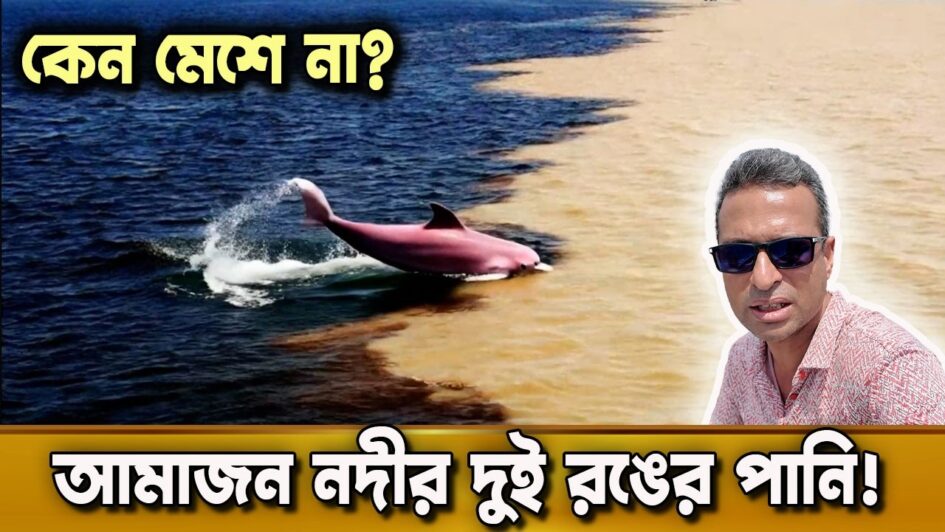
The Amazon River, a marvel of nature, holds many secrets. One of its most astonishing phenomena is the Meeting of Waters near Manaus, Brazil, where two rivers, the Rio Negro and the Rio Solimões, flow side by side for miles without mixing. Why do the Amazon’s two colors not mix? This natural wonder draws tourists from across the globe, eager to witness the distinct black and sandy-colored waters maintaining their separate paths.
The Mysterious Meeting of Waters
In the heart of Brazil, near the city of Manaus, lies a breathtaking spectacle. Here, the dark, almost black waters of the Rio Negro converge with the light, sandy-colored waters of the Rio Solimões. For approximately 10 kilometers, these two mighty rivers flow in parallel, forming a clear, visible line where their distinct colors refuse to blend. This unique phenomenon, known locally as the Meeting of Waters (Encontro das Águas), is a testament to nature’s incredible artistry.
Scientists and river experts offer several explanations for why the Amazon’s two colors do not mix:
- Temperature Difference: The Rio Negro is significantly warmer (around 28°C) than the Rio Solimões (around 22°C).
- Flow Speed: The Rio Negro flows at a slower speed (about 2 km/h) compared to the Rio Solimões (about 4 to 6 km/h).
- Density Variation: The Rio Negro, rich in organic matter from decaying vegetation, has a higher density and acidity compared to the more sediment-laden Rio Solimões. These differences in physical and chemical properties create a natural barrier, preventing immediate mixing.
Challenges Facing the Amazon
While the Amazon River is a place of immense natural beauty and biodiversity, it faces significant threats. Despite its vastness and incredible depth—reaching up to 150 feet in some areas—the river is not immune to human impact. Gold mining operations, particularly in the Brazilian section, release mercury into the river, contaminating fish and endangering the rich aquatic ecosystem. Iconic species like the pink dolphin, piranha, and the colossal arapaima, once abundant, are now facing extinction.
Furthermore, human settlement along the river has led to the growth of floating communities and slums, directly contributing to pollution as waste is discharged into the waters. The river also experiences severe droughts, which significantly reduce its width and increase water temperatures, further stressing its delicate balance. The Amazon, which supports nearly 10% of Earth’s biodiversity, is under continuous threat, highlighting the urgent need for conservation efforts to protect this global treasure.
Discover the incredible mystery of the Amazon’s two-colored water in Brazil! Witness the “Meeting of Waters,” a unique natural phenomenon where the dark Rio Negro and the light Rio Solimões flow side-by-side without blending. This vlog offers drone and boat views of this magical border, live experiences from Manaus, and insights into local river life and culture, challenging scientific explanations for why these waters do not mix.
Leave a Reply